There was a time when cafés existed for one simple purpose: to serve coffee.
Today, they have become something much bigger.
They are offices, meeting rooms, reading corners, creative studios, social hubs, and sometimes even a second home.
This shift did not happen by accident.
It reflects a much broader change in how we live, work and connect with one another.
The Experience Economy
Modern consumers no longer spend money only on products. They invest in experiences.
In an age where almost everything can be delivered to our doorstep, the places people choose to physically visit must offer something online shopping never can—a feeling. This has transformed architecture and interior design.
The most successful hospitality spaces are no longer designed only to look beautiful.
They are designed to make people feel something.
Comfort.
Belonging.
Calm.
Connection.
Architecture Shapes Human Behavior
Environmental psychology has long shown that our surroundings influence how we think, feel and behave.
Natural light encourages longer visits.
Comfortable temperatures reduce stress.
Open views create a sense of freedom.
Greenery lowers mental fatigue.
Soft transitions between indoor and outdoor spaces make environments feel more welcoming.
People often believe they are choosing a café because of the menu.
In reality, they frequently return because of how the space makes them feel.
Why Customers Stay Longer
Length of stay has become one of the hospitality industry's most valuable metrics.
The longer guests remain comfortable, the greater the opportunity for conversation, additional orders, recommendations and memorable experiences.
A customer who stays for forty minutes may order one coffee.
A customer who enjoys spending two hours may order dessert, another drink, invite friends, or decide to return next weekend.
Comfort directly influences business performance.
Capitalism Changed the Way We Design
As cities became denser and lifestyles busier, businesses began competing for one resource above everything else: Attention.
Beautiful interiors became Instagram-worthy.
Signature lighting became branding.
Outdoor terraces became destinations.
The rise of social media accelerated this transformation.
People no longer simply consume spaces—they photograph them, share them and recommend them.
Every customer with a smartphone has become a potential marketer.
But aesthetics alone are no longer enough.
Consumers are becoming increasingly selective.
They quickly recognize spaces that are beautiful yet uncomfortable.
This is where a new movement is emerging.
From Love Brand to Trust Brand
Brands once focused on becoming memorable. Today, the strongest brands focus on becoming trustworthy. A Trust Brand consistently delivers what it promises. Its spaces work in every season. Its materials age beautifully. Its quality is visible years after installation. Its customers know exactly what to expect every time they visit. Trust is no longer built only through marketing. It is built through experience.
Outdoor Architecture Is No Longer an Extra
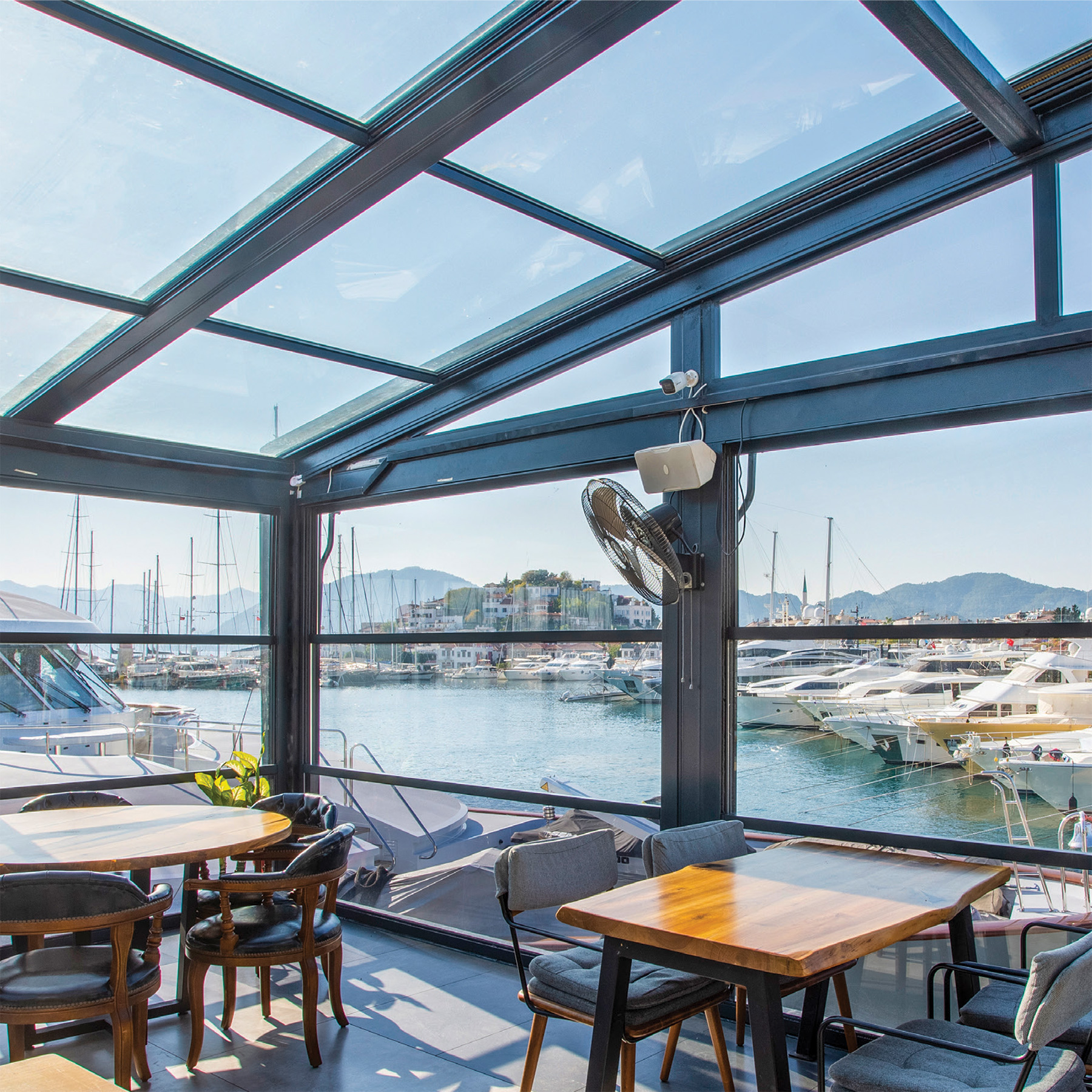
The outdoor area of a café or restaurant is no longer simply additional seating. It has become one of the business's greatest assets. A well-designed outdoor space allows businesses to welcome guests throughout the year instead of only during ideal weather conditions. It creates flexibility during busy hours. It expands revenue without changing location. Most importantly, it offers people what they increasingly seek: Fresh air without sacrificing comfort. Natural daylight without excessive heat. Protection from rain without disconnecting from nature.
Where Design Meets Performance
At Matek Grup, we believe outdoor architecture should contribute to both human experience and business success.
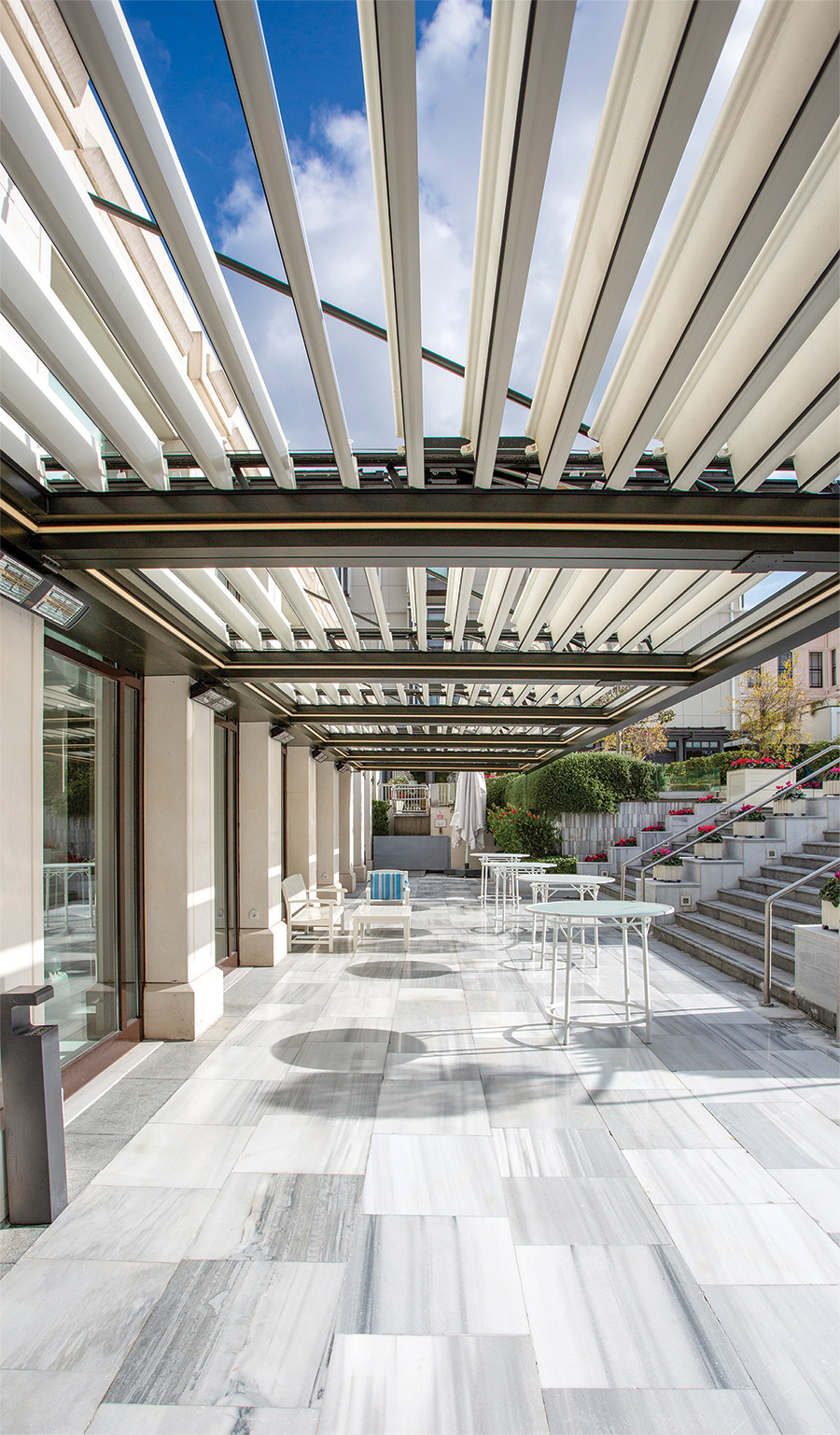
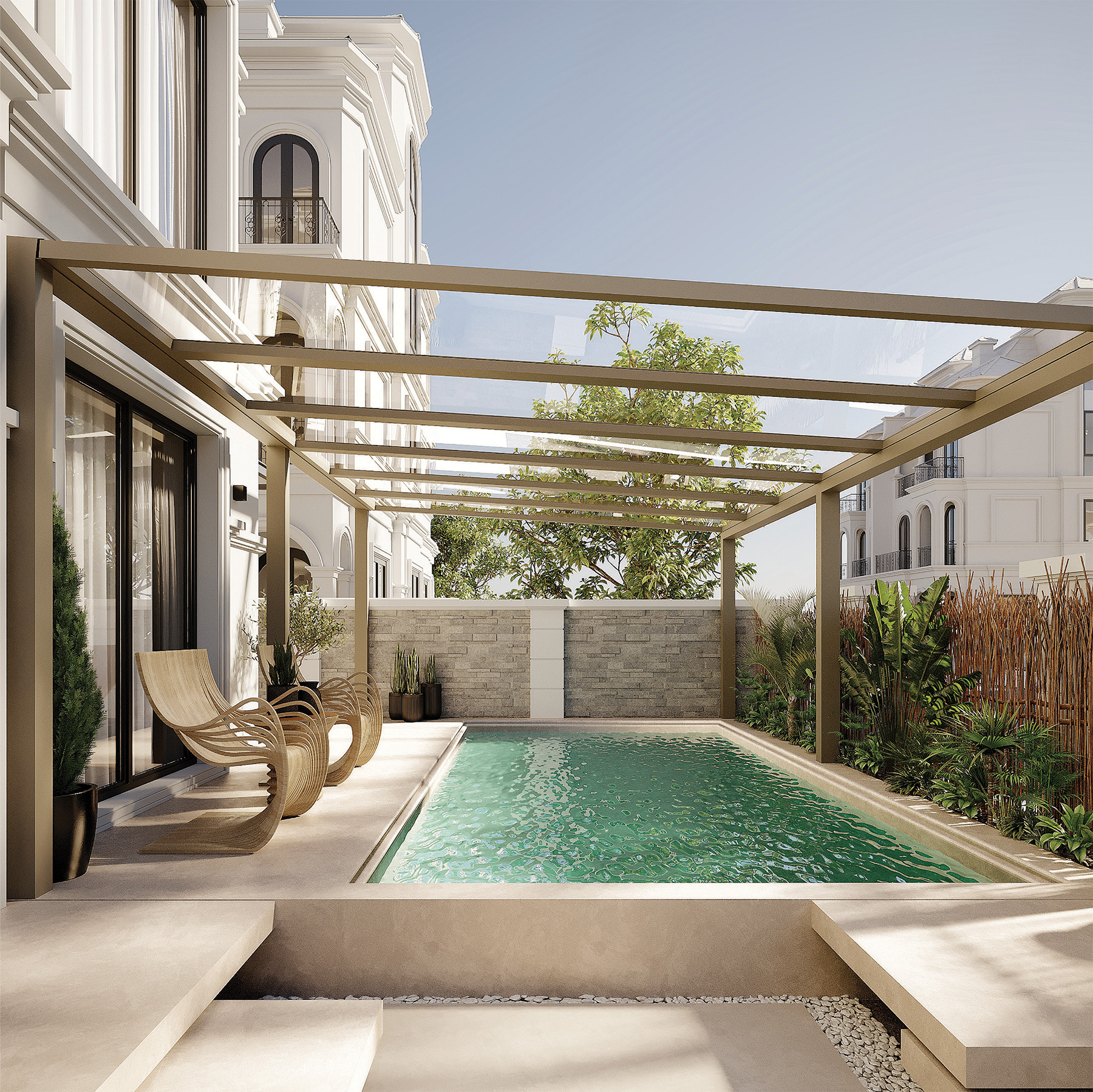
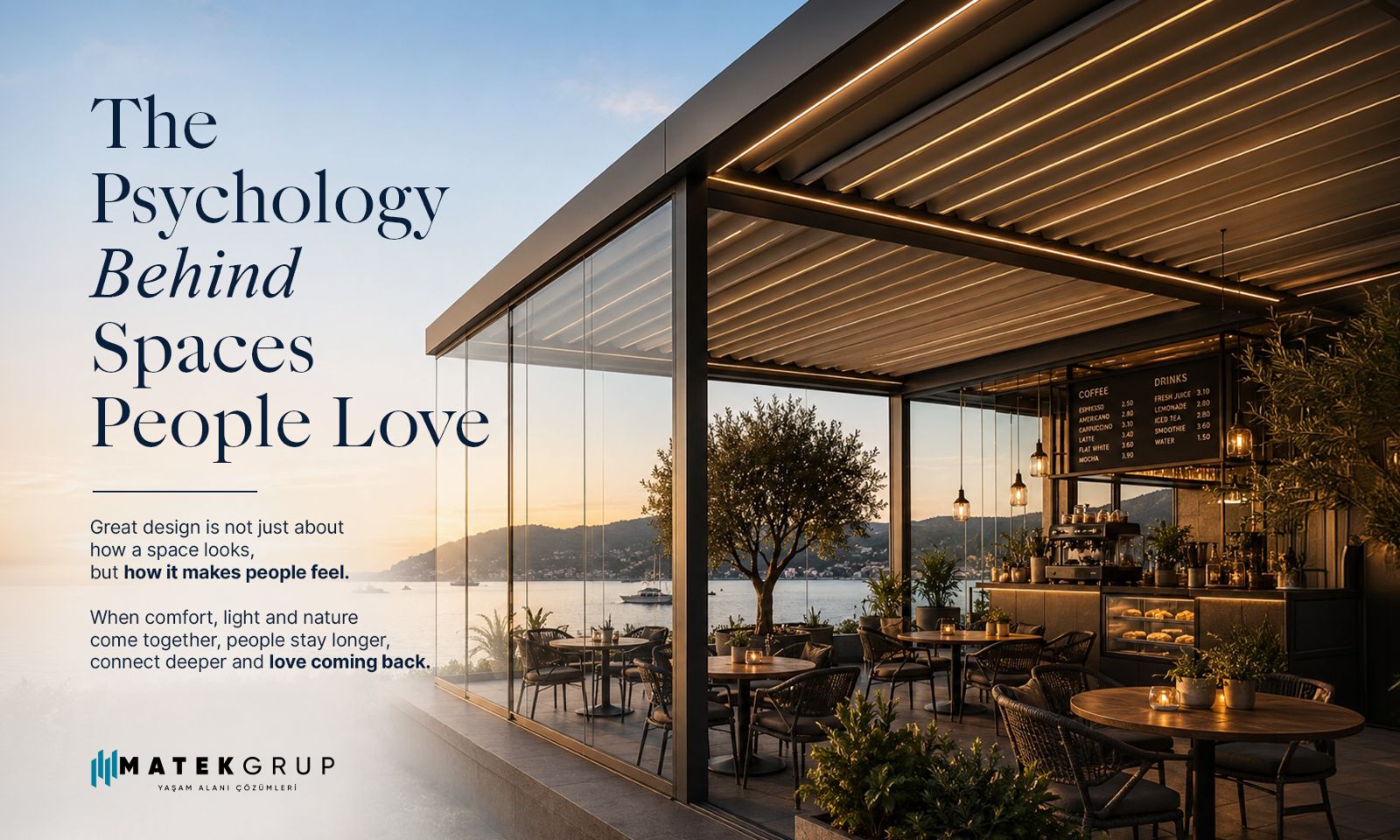
Our bioclimatic pergolas, glass roof systems, vertical glazing systems and façade solutions are designed not simply to protect spaces from the weather, but to transform them into destinations people genuinely enjoy spending time in.
For hospitality businesses, this means creating outdoor environments that remain inviting throughout the seasons, increase usable seating capacity and encourage guests to stay longer. For homeowners, it means extending everyday life into the outdoors with the same comfort found inside the home.
Because great architecture is not measured only by how impressive it looks on opening day.
It is measured by how naturally people continue to use it—day after day, season after season.
And perhaps that is the greatest compliment any designer or business can receive: "I never want to leave this place."